

Who is Crainn?
Crainn is a voluntary group which aims to push for legislative and policy change to Ireland’s current drug strategy. Established in 2021 with almost 40,000 community members across our platforms, we engage with relevant Government Departments, public representatives, public bodies and other stakeholders regularly.
Our mission thus far has been to push for a much broader and holistic focus relating to drugs from government, focusing on three primary areas: Education, Harm-Reduction and Community.

A core focus of our campaign involves the legalisation and regulation cannabis from a public health perspective.
Based on the latest European, Irish and global data, the shift from prohibition toward regulation appears more and more effective in reducing drug-related harms.
Our work thus far has involved a number of in person public ‘information days’ on drug policy, representation at the Oireachtas Committee on Justice in which we presented evidence on the topic of legalisation, multiple local, national and international media appearances, public debates in Universities across the country, and most recently, a presentation of evidence to the historic Citizens’ Assembly on Drugs Use.
Oireachtas Justice Committee
In 2022, the Oireachtas’ committee shadowing the Department of Justice chaired by Fianna Fáil TD James Lawless held a hearing to examine Ireland’s current drug strategy.
As part of their examination, a number of groups were invited to make both written and oral testimony to committee members, which is made up of a number of TDs and Senators from across all political parties.

This recent report, influenced by local, national and international evidence found quite clearly that the present approach to drug use is currently causing more harm than good.
The report, supported on a cross part basis found that large-scale criminalisation of drug use is counter-productive and that legalisation/regulation of certain drugs (such as cannabis) should be seriously considered by Government.
Cross-party consensus currently exists now on a brand new, radical re-working of Ireland’s drug policy.
It is vital that stakeholders, including farmers, become involved as future policy begins to take shape.
The full Oireachtas report can be read here.
Citizens’ Assembly on Drugs Use
Within the current Programme for Government it was clearly stated that the establishment of a Citizens’ Assembly examining drug policy would take place over the course of this Government’s term. This process began in early 2023, and is due to finish its proceedings this October.
The Citizens’ Assembly involves 99 random members of society being tasked with examining an often complex topic in detail over the course of several months leading to a vote at the end which will make up the Assembly’s recommendations to Government.
The Citizens’ Assembly in the past has brought about substantial societal change within Ireland, including in areas such as same-sex marriage, abortion and gender equality. With drugs, we believe similar paradigm-shifting changes taking place following the Assembly.

In September, Crainn was invited to make an oral presentation to the 99 members which included a focus on cannabis regulation.
The presentation can be watched here.
The Use of Cannabis in Ireland
Ireland’s most used psychoactive drug is, by far, alcohol. However, coming close behind is cannabis.
52% of third-level students in the most recent Government study on drug use in higher education have engaged in drug use, with virtually all of this being cannabis.

Cannabis is also increasingly popular all over the world, with jurisdictions in Europe, North America and Asia beginning to recognise this fact by changing outdated law that was written during a time when research on cannabis was severely lacking.
Changing Attitudes
Year on year, public attitudes toward cannabis legalisation become more positive as more jurisdictions report substantial economic and social success, along with the increased rates of use.
The most recent and robust survey of cannabis legalisation attitudes, carried out by Red C and published in the BusinessPost showed record-high approval rates of over 50%, with opposition sitting in around 30%
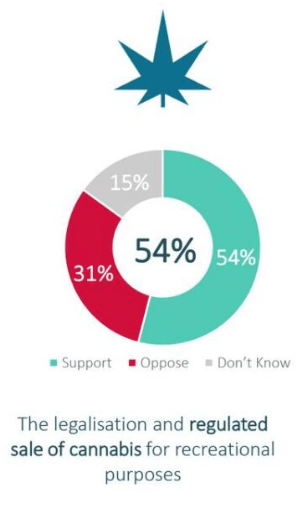
This growing trend that has been occurring since the 1970s is now reaching new heights, and requires a new approach from the whole of society.
Synthetic Cannabinoids
Cannabis is a relatively safe substance. This is currently the consensus, and in comparison to legalised drugs such as alcohol and nicotine, the risks of cannabis are fractional when compared.
Despite this, an alarming trend is currently plaguing Irish cannabis consumers. Counterfeit cannabis, commonly referred to as ‘synthetic cannabis,’ ‘synthetic cannabinoids,’ ‘spice,’ or ‘SCRAs’ currently dominate the unregulated Irish cannabis market.
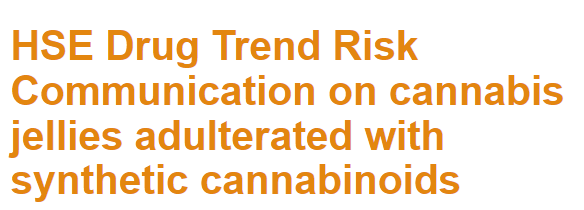
More recently, the HSE has issued a very serious and stark alert on the prevalence of synthetic cannabinoids and their serious risk of harm. That can be read here.
These products are a serious concern. Their side-effects include serious, long-lasting damage alongside a number of deaths across Europe. Earlier this year in Tipperary, a number of hospitalisations occurred due to the accidental ingestion of these products.

It should be stressed that the existence of these products are solely due to the illegality of cannabis. In legal, regulated jurisdictions the rates of synthetic cannabinoids are virtually zero, or at very marginal rates. This issue has been identified by the European Drug Monitoring Agency [EMCDDA] as an emerging threat, particularly acute in five jurisdictions – Ireland being one of them.
In order to protect cannabis consumers across the country, immediate steps must be made to regulate the plant in order to ensure high quality control and safety.
Medical Cannabis
Cannabis has had a long history of medicinal and theraputic use, and is probably one of its best known and widely understood properties.
Indeed, the Irish Government recognise this. The ‘Medical Cannabis Access Programme,’ established in 2019 by the Department of Health currently exists and legally provides cannabis for medicinal use under three very rare conditions.
Although publicly the Government accepts medicinal cannabis, the number of people availing of the current programme is shockingly low. The below graphic highlights this quite well.
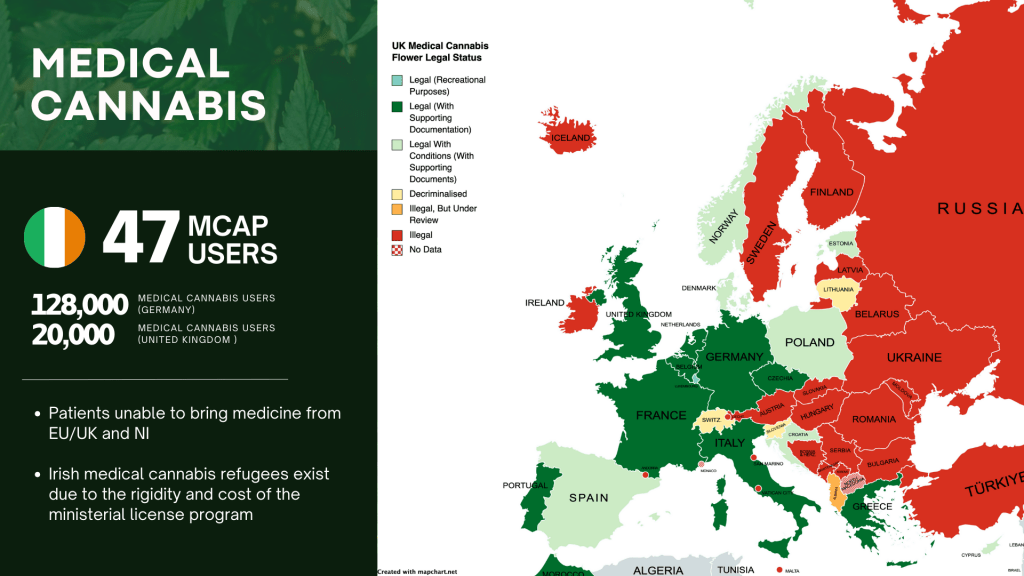
Medicinal cannabis is high quality, tested product that is created and geared toward allievating symptoms of chronic illness.
Currently, Ireland receives its medical cannabis supply from the Netherlands, neglecting the opportunity to make use of the agricultural talent here in Ireland and fostering a community of medicinal cannabis growers that can provide high quality, tested product.
Medicinal cannabis is currently under review in Ireland, with the potential for an expansion to other conditions such as chronic pain. Pain related prescriptions for medical cannabis are the most popular globally, however Ireland’s current programme does not cover pain at all.
A Changing Europe
Legislative change has been well documented across North America, however the European Union is currently undergoing massive changes with regards to cannabis legalisation.
Some of Europe’s most influential figures have begun shifting toward a legalised system, most notably Germany, Europe’s strongest and largest economy.
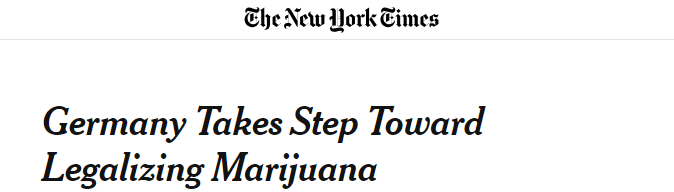
Following Germany’s plans, another number of European countries announced similar plans including Czechia, Malta, Luxembourg and the Netherlands. Similarly, other European powerhouses such as Belgium have signaled an appetite for legalisation in their own country.
Europe is currently well-placed to become the global leader in terms of canabis. Europe can learn from the mistakes of American legalisation and move forward with a unified, sensible and public-health led approach to regulation.
The regulation of cannabis in Europe is expected to generate billions of additional tax revenue every year, creating new jobs and strengthening the agricultural sector.
Financial Potential
Colorado, an American State that legalised cannabis in 2014 has a very similar population size to Ireland, as well as extremely similar demographics.
Since they legalised cannabis, the industry is currently worth $2 Billion. The creation of a legal cannabis industry has also created thousands of new jobs across multiple sectors including agriculture.
Additional revenues are also saved due to the savings in law enforcement costs, including police time, court time and prison space.

If Ireland were to legalise, the emerging industry would become a sustainable source of income for the Irish exchequer and strengthen the viability of the agricultural sector.
Germany, who are not yet fully legalised, has generated €51 million from medicinal cannabis alone in Q1 of 2023. Furthermore, hemp farming is also becoming a major source of income all across the European Union, with Ireland being left far behind.
 Crainn
You must be logged in to post a comment.